Lyrics
bābā ke anganā chanan-ghan gachhiyā,
tāhi tar shītal basāt yau ।
bābā ke anganā chanan-ghan gachhiyā,
tāhi tar shītal basāt yau ।
tāhi tar bābā palang ochhāol,
seho bābā sutal nishchint yau ।
saih suni bābā uṭhalā chehāi,
chali bhelā magah munger yau ।
saih suni bābā uṭhalā chehāi,
chali bhelā magah munger yau ।
dakshiṇ khojal bābā pachchhim khojal,
khoji lel magah munger yau ।
dakshiṇ khojal bābā pachchhim khojal,
khoji lel magah munger yau ।
torā juguti beṭī bar nahi bheṭal,
bheṭal tapasī bhikhārī yau ।
torā juguti beṭī bar nahi bheṭal,
bheṭal tapasī bhikhārī yau ।
ahān lekhe aiyo yau bābā tapasī bhikhārī,
morā lekhe shrī bhagavān yau ।
ahān lekhe aiyo yau bābā tapasī bhikhārī,
morā lekhe shrī bhagavān yau ।
bhel biāh shrīrām chalū kobar,
likhal meṭal nahi jāi yau ।
bhel biāh shrīrām chalū kobar,
likhal meṭal nahi jāi yau ।
likhal meṭal nahi jāi yau - 2
See Full lyrics
Song Description
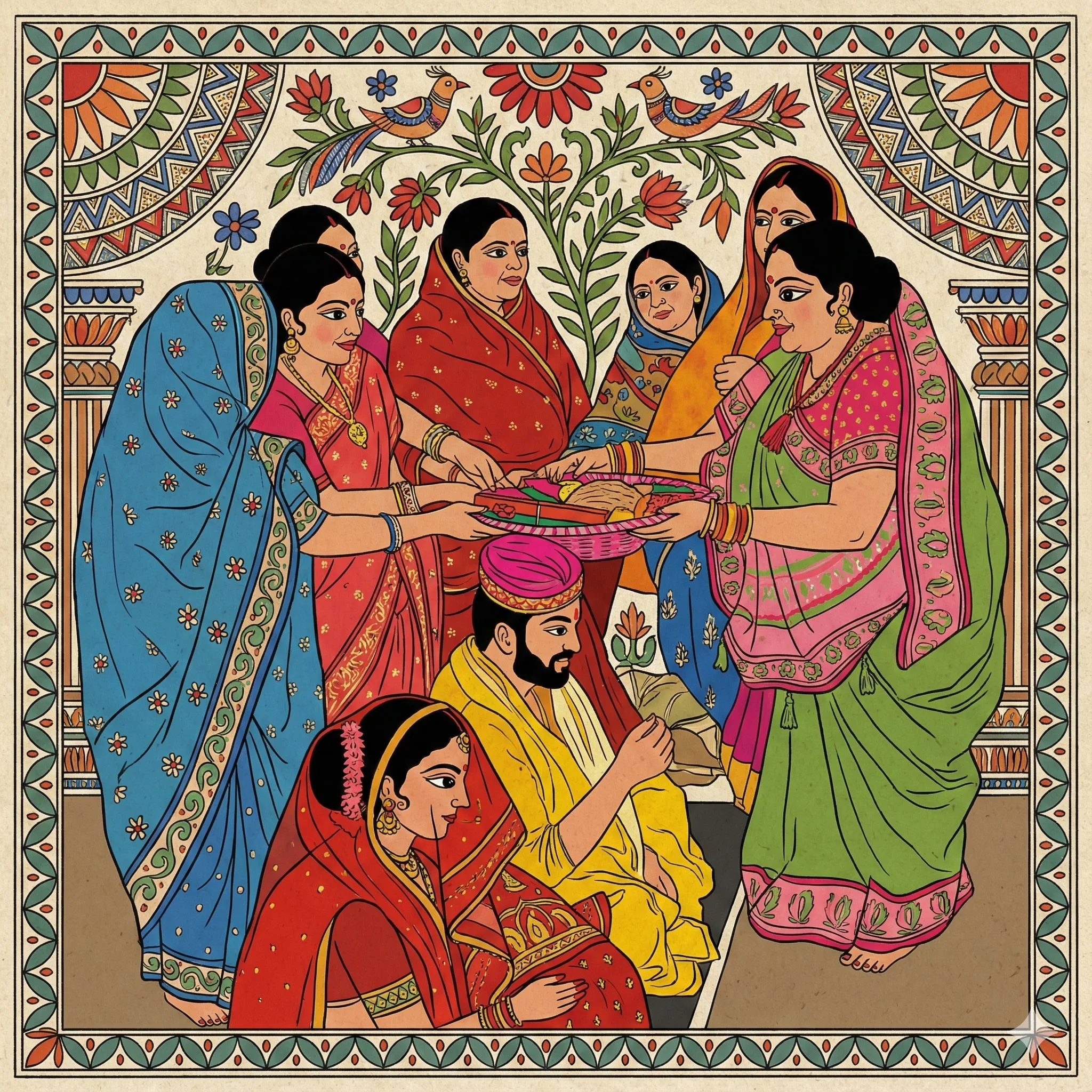
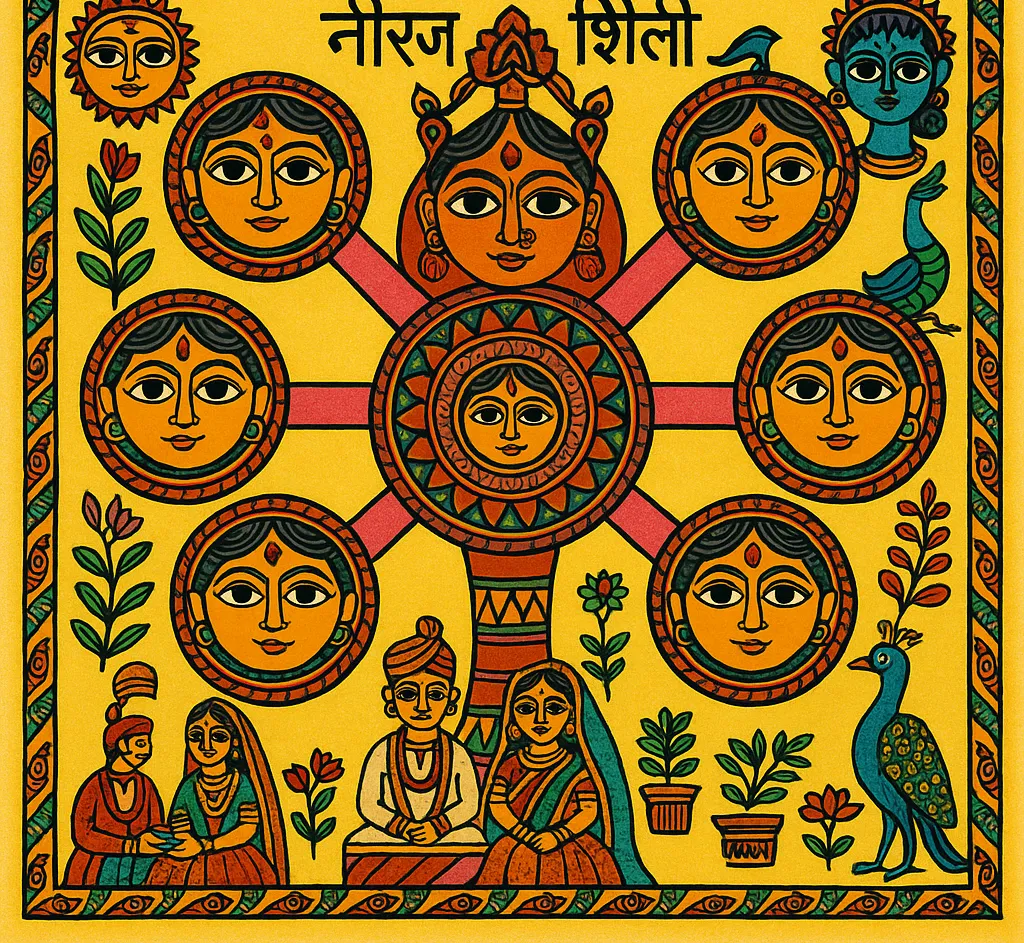
Samdaun is an apabhraṃśa (linguistic variation) of the word sambodhan (address). Once the Dūragman date is set, women begin preparing for the bride to go to her new home, and the Samdaun songs are sung during these preparations. These are deeply emotional songs because in earlier times, once a girl left her parents’ home it was extremely difficult for her to visit—there was little transport, no telephone contact, and the brides were often very young. Samdaun is also performed at the moment of vidāi (farewell), when a daughter leaves her family to depart for her marital home. The songs fill the atmosphere with poignancy, often bringing tears as they express the pain of separation from parents. In this particular song, the dialogue is between a father and his daughter: the father laments that he searched the world for a worthy groom but found only a poor ascetic, while the daughter replies that though he may appear poor to him, for her he is like a god.
More songs by
Vibha Jha
Daradī sajanā
Vibha Jha
mudā chhan me
Vibha Jha
Ehan sundar mithilā dhām
Vibha Jha
Yau nārad katae bujhā ham kahalaun
Vibha Jha
Ham chhī sītā
Vibha Jha
Ehi bāṭe bholā gelā
Vibha Jha
Jakhane badhaiyā māngऽ
Vibha Jha
Sutal chaliye baba ke bhavnama mein
Vibha Jha
Ham nai jīyab binu rām
Vibha Jha
Gauri puju jaanaki janak bhavan mein
Vibha Jha
More songs like
Baba ke angana
Chalu dekhu bhari nayanā
Rajni Pallavi
Avadh nagariyā san
Rajni Pallavi
Priy pāhun sindūr dān karū
Rajni Pallavi
He sītā mātā katek tap kelaun
Rajni Pallavi
Duari chhekaunī ahān
Rajni Pallavi
Bhaiyā bhauji san kariyaun vichār,
Rajni Pallavi
Ham dhanamā kuṭaibai ehi baṛabā san
Rajni Pallavi
Aju bājae badhaiyā kobar ghar me
Rajni Pallavi
Hamarā anganā me ugi gelai chān
Rajni Pallavi
Siyā ke sohāg dai lay
Rajni Pallavi
Ehan sundar mithilā dhām
Vibha Jha
Gītiyā me chittiyā
Rani Jha
Aju sobha janak mandir
Rani Jha
Jau ham janitahun
Rani Jha
Dhan dulhā rāmachandra
Rani Jha
Sutal chaliye baba ke bhavnama mein
Vibha Jha
Barasā barase re sabariyā
Kanchan Jha
Gauri puju jaanaki janak bhavan mein
Vibha Jha
ūnchā re jharokhā
Premlata Mishra
Dhīyā binu sūnā
Premlata Mishra
Mehī bhāt jatan bhanasiā
Premlata Mishra
Jaahi ghar aaho baba
Premlata Mishra
Parichhani chaliyau sakhī
Vibha Jha
Chitachorabā āi banhaulan
Vibha Jha
Sunū sakhiyā he
Vibha Jha
Chalu gaurī pūjan phulavārī
Kanchan Jha
Yau dulhā chinhī liyau
Vibha Jha
Berī-berī barajahun
Premlata Mishra
Samadhi ke ham gāri nai daiy chhī
Premlata Mishra
Ghar pachuarba mein
Vibha Jha
Parichhī koī le re
Kanchan Jha