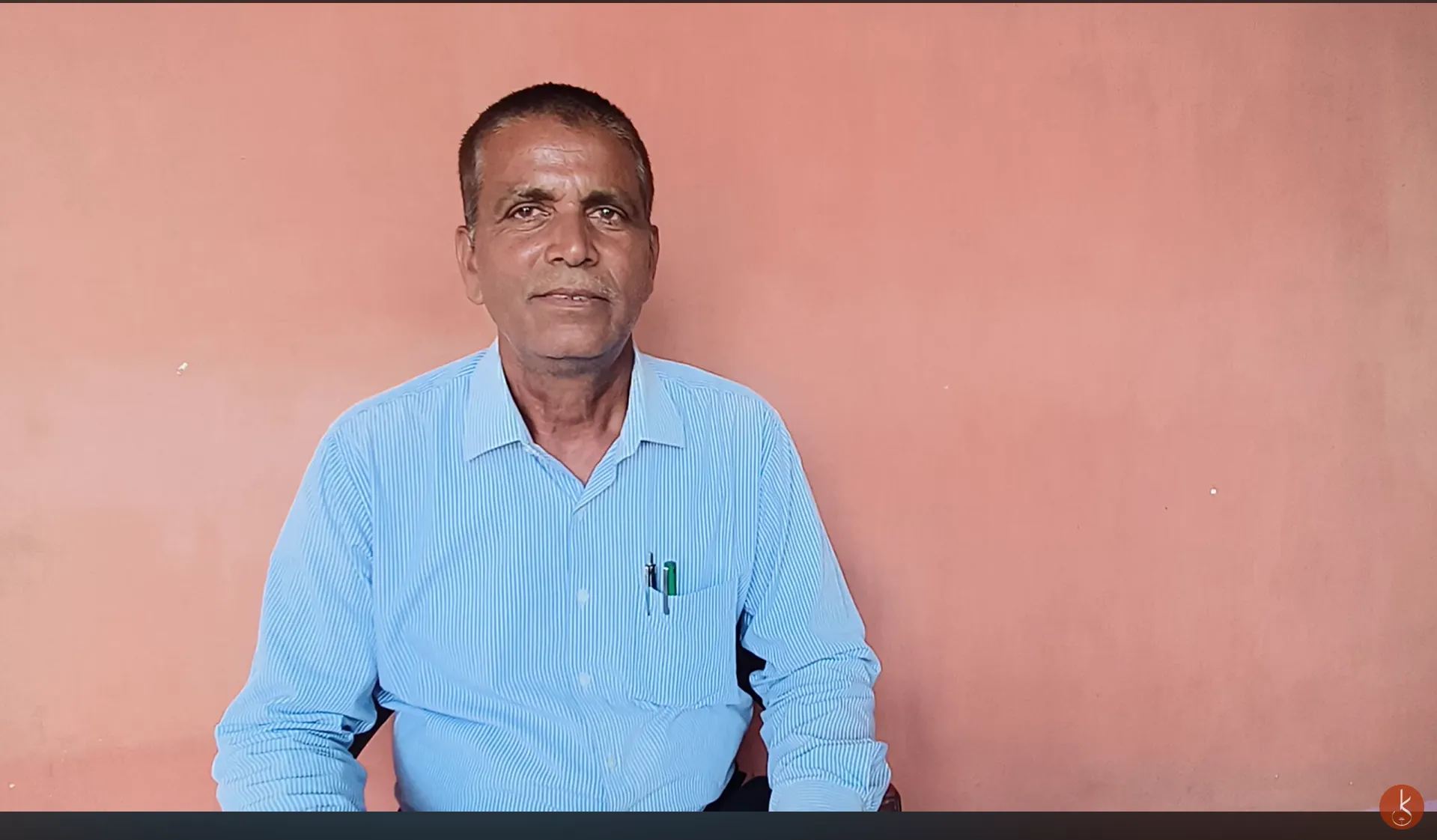
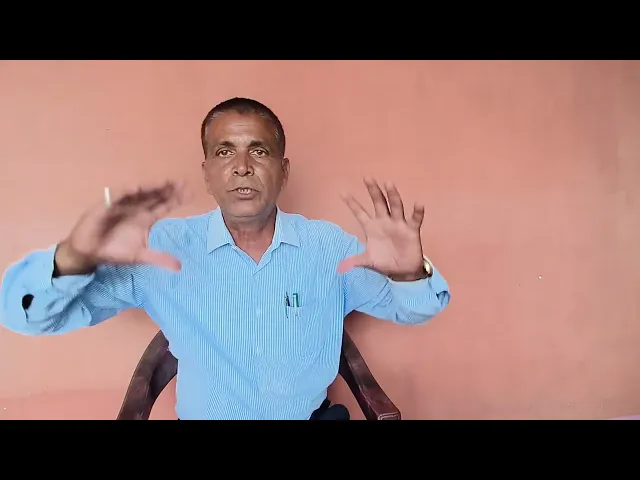
This video features Dr. Shiv Prasad Yadav speaking in Maithili about Bhagat singing traditions and the story of Jyoti Maharaj, drawing from childhood memory and academic research. Dr. Yadav is a researcher and scholar of Bhagat traditions who completed his PhD on Jyoti Panjiyar. The written piece below, based on an extended conversation with him, provides context for those unfamiliar with Maithili or Bhagat traditions.
Bhagat singing is a living folk tradition practiced largely by Dalit and other marginalised communities across parts of Mithila and adjoining regions. It is devotional, narrative, and communal, deeply embedded in everyday village life. Unlike the Vedas, Puranas, or Gita—texts written in Sanskrit and historically accessible only to educated upper-caste groups—Bhagat traditions developed within communities for whom such texts were largely inaccessible. Through song and oral storytelling, these communities created their own spiritual and cultural pathways.
Dr. Yadav recalls growing up listening to Bhagat songs from childhood. When he began his doctoral research, he returned to his village and nearby villages to spend time with Bhagats, listening to their songs, recording them, and transcribing their narratives. His work sits at the intersection of lived tradition and academic inquiry.
Bhagat Songs: Devotion and Narrative
Bhagat songs, known as Gathas, fall into two broad categories. The first is Bhakti Gatha—devotional narratives centred around figures such as Jyoti Maharaj, Dharmaraj, Beni, Andu, and Uday. These songs recount the lives, trials, and spiritual journeys of local deities and saints, offering moral guidance and reflection.
The second category includes narrative songs meant primarily for entertainment, telling stories of heroes such as Allaudal, Salhesh, Lorik, and Dulra Dayal. These songs are performed with dramatic flair and are enjoyed collectively, often over long nights of singing.
Historically, Bhagat singing served multiple purposes. Villages kept their cattle in open enclosures known as Bathan (cattle folds). Loud singing through the night helped deter wild animals and protect livestock, while also becoming a space for prayer, reflection, and community bonding. In this way, Bhagat singing combined protection and spirituality, survival and worship.
The Story of Jyoti Maharaj
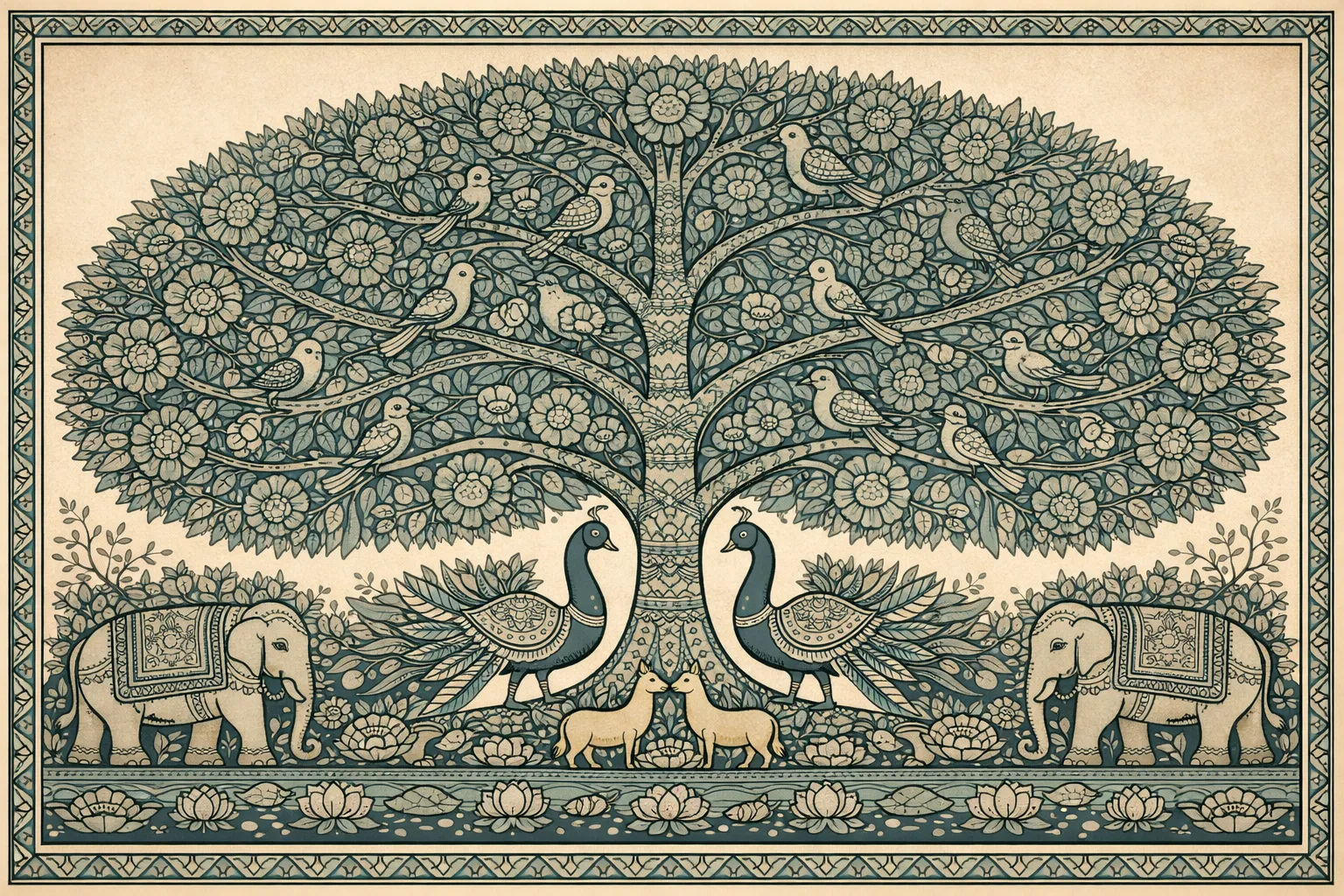
Among Bhagat narratives, the story of Jyoti Maharaj holds particular importance. According to the tradition, Jyoti was born in a tilled field. In Maithili, "tilled" is called jotal. Dharmaraj is said to have fashioned a child from mud and placed him there. Kirti Paswan, a watchman returning home after his night duty, discovered the child surrounded by a divine glow. He and his wife, a childless couple who had long prayed to Dharmaraj, took the child home and raised him as their own. The child was named Jyoti—both for the tilled field (jotal) where he was found and for the divine light (jyoti) that surrounded him.
From an early age, Jyoti showed deep spiritual inclination. Though his family's livelihood involved rearing pigs, Jyoti was drawn to prayer. One day, while grazing animals, he created symbolic offerings from what was available around him—laddus from earth, paan from leaves, supari from fruit, and a flag from his loincloth—and began to pray. When Dharmaraj passed by and asked for prasad, Jyoti hesitated, knowing it was symbolic. But upon insistence, when he offered it, the make-believe offerings turned real. This moment marked Jyoti's spiritual awakening. Impressed by his devotion, Dharmaraj blessed Jyoti to continue his spiritual pursuits and promised to return after twelve years.
When Dharmaraj returned twelve years later, he came disguised as a sadhu and tested Jyoti by demanding food and a place in the sacred prayer room (gahbar) Jyoti had built exclusively for Dharmaraj. Jyoti refused, remaining steadfast in his devotion. Angered when the villagers attacked the disguised sadhu at Jyoti's behest, Dharmaraj revealed his true form and cursed Jyoti with leprosy.
Stricken, Jyoti undertook severe penance in Kedli Van. On his journey, when denied water by several figures—including his sister—he cursed them, promising to release them after twelve years. After years of intense tapasya, his body weakened almost to disappearance. When Dharmaraj finally returned, moved by Jyoti's devotion, he lifted the curse and restored him.
Before returning home, Jyoti tested Dharmaraj once more, asking him to hold milk in the corner of a cotton dhoti filled with grass. When Dharmaraj succeeded, Jyoti accepted him as divine and asked that all those he had cursed be released. Jyoti then returned to his village and lived a life of prayer and spiritual practice.
The story teaches values of truth, sacrifice, and spiritual discipline, offering a path to salvation through devotion and endurance.
Community, Change, and Continuity
For Bhagats and village communities, singing these songs brings inner peace, strength, and motivation. In difficult living conditions marked by poverty and marginalisation, collective singing fosters a sense of brotherhood and belonging.
Traditionally, participation came largely from Dalit and OBC communities, but today people from savarna and educated backgrounds also join. Mandalis are growing, and in many villages there are now multiple groups.
Modernisation has transformed Bhagat singing. Where once a single instrument accompanied the voice, today multiple instruments, dance, costumes, and visual spectacle are common. Performers sometimes dress as deities like Hanuman, and colourful troupes—rangin batch—draw large audiences. While this has increased popularity, it has also shifted focus toward entertainment.
Dr. Yadav does not see this change as entirely negative. Even when audiences come for spectacle, they are exposed to the stories, deities, and traditions. At the same time, he emphasises urgency: if Bhagat songs are not recorded now in their older, simpler forms, their original texture and meaning may be lost.
Preserving Bhagat traditions is not about resisting change, but about documenting continuity. These songs carry histories, beliefs, and community memory that deserve to be heard, understood, and passed on.